


By PRADEEP KUMAR PANDA
Odisha’s NFHS-6 report reveals a striking contrast: record institutional deliveries and stronger maternal healthcare, alongside rising child wasting and underweight rates. Can the state bridge the gap between healthcare access and nutrition outcomes?
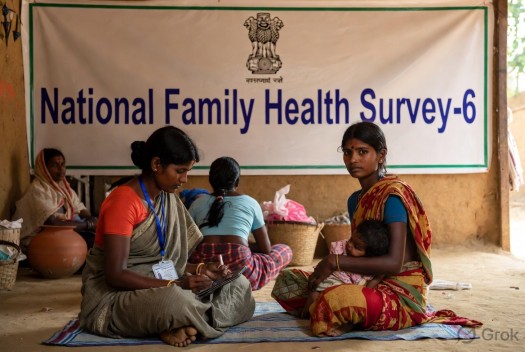
Bhubaneswar, June 1, 2026 — The release of the National Family Health Survey-6 (NFHS-6, 2023-24) factsheets has offered a comprehensive snapshot of Odisha’s evolving health and demographic profile. Conducted by the Ministry of Health and Family Welfare with the International Institute for Population Sciences (IIPS) as the nodal agency, NFHS-6 surveyed nearly 6.79 lakh households nationwide, providing state and district-level insights.
For Odisha, the data reveals a tale of two realities: remarkable progress in maternal healthcare access and institutional deliveries, contrasted by concerning setbacks in child nutrition indicators. When benchmarked against NFHS-5 (2019-21) and national averages, the state demonstrates resilience in service delivery but exposes systemic gaps in addressing undernutrition, particularly in its tribal-dominated regions.
Maternal Healthcare: A Story of Strong Advancement
One of the most heartening aspects of NFHS-6 for Odisha is the continued strengthening of maternal health infrastructure. Institutional deliveries have risen to an impressive 93.9% in NFHS-6, up from 92.2% in NFHS-5. This outperforms the national average of 90.6%, which itself improved from 88.6% in the previous round. Births attended by skilled health personnel have similarly shown robust gains, reflecting the impact of schemes like Janani Suraksha Yojana (JSY) and Ayushman Bharat, which have expanded outreach in rural and remote areas.
Antenatal care (ANC) coverage remains high, with a significant proportion of pregnant women receiving at least four ANC visits and iron-folic acid (IFA) supplementation. Nationally, mothers receiving ANC in the first trimester increased from 70% to 76.2%, and at least four visits rose from 58.5% to 65.2%. Odisha has aligned well with or surpassed these trends, thanks to dedicated ASHA workers and community health volunteers who have bridged the last-mile gap.
However, this progress comes with a caveat: a sharp surge in Caesarean section (C-section) rates. In Odisha, C-sections climbed to 29.4% from 21.6% in NFHS-5, exceeding the national figure of 27.2%. The disparity between public and private facilities is stark — nearly 76.8% of private facility deliveries in the state were C-sections, compared to just 19.9% in government facilities. This raises critical questions about over-medicalization of childbirth, potential profit motives in private sectors, and the need for stricter clinical guidelines to avoid unnecessary interventions. High C-section rates are associated with delayed breastfeeding initiation and higher healthcare costs, issues that Odisha must address urgently.
Fertility and Family Planning: Stability Amid Progress
Odisha’s Total Fertility Rate (TFR) has stabilized below the replacement level of 2.1, mirroring the national TFR of 2.0. This consistency across NFHS-5 and NFHS-6 indicates successful family planning initiatives. Contraceptive prevalence, especially modern methods, shows steady uptake. The state benefits from targeted awareness campaigns that empower women to make informed reproductive choices, contributing to smaller family sizes and better resource allocation per child.
The Nutrition Paradox: Gains Undermined by Setbacks
While maternal access metrics shine, child nutrition presents a more troubling picture, highlighting a disconnect between facility-based care and community-level outcomes.
- Wasting (acute malnutrition, low weight-for-height) has worsened significantly, rising to 22.1% in NFHS-6 from 18.1% in NFHS-5. This is notably higher than the national average of 19%, placing Odisha among the poorer performers nationally, alongside states like Madhya Pradesh and Jharkhand.
- Underweight children increased to 31.6% from 29.7%, while the national trend showed a marginal decline.
- Stunting (chronic malnutrition, low height-for-age), however, improved to 26.8% from 31% in NFHS-5, performing better than the national average of 29.3%. This decline signals some success in long-term interventions but remains unacceptably high in a state with substantial tribal populations.
These figures underscore a “double burden of malnutrition” — persistent undernutrition among children coexisting with rising overweight and obesity among adults. In Odisha, women overweight or obese rose sharply to 29.7% from 23%, and men to 27.8% from 22.2%, slightly above national levels (30.7% for women and 27.3% for men). Meanwhile, underweight prevalence among women declined modestly to 18.9%.
Breastfeeding Challenges Despite Institutional Deliveries
A particularly paradoxical finding is the decline in breastfeeding practices despite higher institutional births. Exclusive breastfeeding for children under six months dropped from 72.9% in NFHS-5 to 66.7% in NFHS-6, compared to the lower national average of around 55.8%. Early initiation of breastfeeding (within one hour of birth) fell from 68.5% to 60.9%.
Rural mothers show better early initiation (61.2%) than urban ones (58.6%), but sustaining exclusive breastfeeding remains challenging due to maternal workload, limited postnatal counselling, and cultural factors. Experts point out that while facilities handle more deliveries, the quality of immediate postnatal support — including skin-to-skin contact and lactation counselling — often falls short.
Immunization and Women’s Empowerment: Positive Notes
Full immunization coverage for children aged 12-23 months has improved, aligning with the national rise to 87.1%. Over 95% of vaccinations occur through public health facilities, underscoring public trust in government systems.
Women’s empowerment indicators have also advanced markedly. Bank account ownership among women rose to 90.6% from 86.5%, mobile phone usage from 50.1% to 63.6%, and hygienic menstrual protection among young women (15-24 years) from 81.7% to 88.7%. Spousal violence reports declined from 30.3% to 18.9%, reflecting gradual societal shifts.
Regional and Demographic Disparities
Odisha’s performance varies significantly across districts. Tribal-dominated areas in southern and western Odisha, such as those in Koraput, Malkangiri, and Kandhamal, continue to bear a heavier burden of malnutrition due to poverty, limited agricultural diversity, and inadequate sanitation. Urban pockets, particularly in Bhubaneswar and Cuttack, show better maternal metrics but higher C-section rates and emerging lifestyle diseases.
Expert Analysis and Policy Implications
Public health experts view these mixed results as both an achievement and a wake-up call. “The rise in institutional deliveries is commendable and reflects strong political will and program implementation,” notes Dr. Kalyani Mohapatra, a Cuttack-based gynaecologist. “However, the decline in breastfeeding and surge in wasting indicate that we need to strengthen the continuum of care — from delivery to the first 1,000 days of a child’s life.”
Nutrition specialist, attributes rising wasting to food insecurity, recurrent infections, and climate-induced disruptions in agriculture. “POSHAN Abhiyaan has shown promise in reducing stunting, but we must enhance convergence between health, ICDS, and agriculture departments. Targeted interventions in high-burden districts, including millet-based supplementary nutrition and community-based management of acute malnutrition (CMAM), are essential.”
The dual burden — undernutrition in children and overnutrition in adults — demands a holistic “nutrition-sensitive” approach. Economists highlight that high malnutrition levels cost the state in lost productivity and higher healthcare burdens. With Odisha’s economy growing rapidly through industry and services, investing in human capital via health and nutrition is non-negotiable for sustainable development.
The Road Ahead
NFHS-6 data should serve as a blueprint for Odisha’s health policymakers. Priorities include:
- Quality Enhancement in Facilities: Implement protocols to reduce unnecessary C-sections and strengthen postnatal counselling.
- Nutrition Mission 2.0: Scale up district-specific plans under POSHAN Abhiyaan, focusing on tribal areas with fortified foods, kitchen gardens, and behaviour change communication.
- Breastfeeding Support: Train more lactation counsellors and integrate support into JSY incentives.
- Women’s Empowerment: Leverage SHGs and digital literacy programs to improve health-seeking behaviour.
- Monitoring and Accountability: Use NFHS district-level data for real-time tracking and mid-course corrections.
As India marches towards its SDG targets, Odisha’s journey offers valuable lessons. The state has demonstrated that access to services can improve rapidly with focused governance. Now, the challenge lies in translating that access into equitable, sustainable health outcomes — ensuring every child in Odisha not only survives but thrives. The coming years will test the state’s ability to bridge the gap between impressive infrastructure gains and persistent nutritional vulnerabilities.
Odisha’s Economic Survey: Structural Challenges Sour Optimism
Follow The Raisina Hills on WhatsApp, Instagram, YouTube, Facebook, and LinkedIn




