


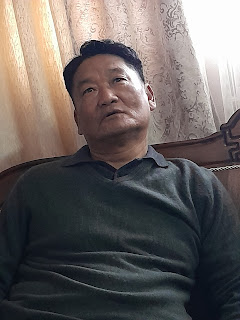
Chuba Ozukum denies NSCN-IM links, admits internal failures, says ‘Divide and Rule’ became New Delhi’s masterstroke
By NIRENDRA DEV
Kohima, February 7, 2026 — In a rare and blunt assessment of Naga politics, Chuba Ozukum, convener of the Global Naga Forum (GNF), has acknowledged that Eastern Nagaland was neglected by Naga leadership, while accusing the Government of India of skillfully exploiting internal divisions among Nagas to push its own strategic outcomes.
Speaking to this journalist at his Kohima residence, Ozukum rejected allegations that the Global Naga Forum functions as a frontal organisation for the NSCN-IM, calling such claims politically motivated.
“When we started speaking uncomfortable truths, we made enemies,” he said. “People began branding us as pro one faction or another. If that logic is applied, then every civil society organisation is aligned with some political force—A with Rio, B with the BJP. There is no end to this hypocrisy.”
Ozukum did not mince words on Naga disunity. “You may say Bengalis are divided, Hindus are divided, Punjabis are divided—but as a Naga, I can say we are the most divided lot. The Government of India knows this very well and knows exactly how to take advantage of it.”
Referring to the Frontier Nagaland Territory (FNT) demand, Ozukum admitted serious failures on the Naga side. “Obviously, we neglected Eastern Nagaland. They joined Nagaland and the larger Naga family in the 1950s and 1960s. Today, they have lost faith in administration and governance. All past and present leaders must admit this failure.”
He questioned the role of elected representatives from the region, adding pointedly: “What have the 20 MLAs from that area been doing? Visit Dimapur and you will get all the answers.”
At the same time, Ozukum accused New Delhi of playing a long, calculated game. “The Centre invested time and resources. This is a textbook case of divide and rule—and that is the masterstroke people are now talking about.”
On the stalled Naga peace talks, Ozukum warned against partial agreements. “FNT may have come, but Nagas are Nagas. We are one people. The spirit of Nagalim is in our veins. Signing peace pacts with A, B or C will not bring a solution. It must be inclusive and collective.”
Calling out contradictions within Naga society, he said: “Many talk about an inclusive solution but want one or two major stakeholders excluded. That is self-contradiction.”
While agreeing that any settlement must be “acceptable and honourable,” Ozukum added a note of realism: “These are good phrases. But they are meaningless if we continue with our internal differences.”
Claiming that the survival of Naga nationalism owes much to organisations like the GNF, he said some groups “close to the Government of India” view the forum with hostility precisely for that reason.
Asked when a final solution might emerge, Ozukum laughed before replying cryptically: “It is very near… but so far.”
Frontier Nagaland Territorial Authority: A Lesson from Kohima
Follow The Raisina Hills on WhatsApp, Instagram, YouTube, Facebook, and LinkedIn




