


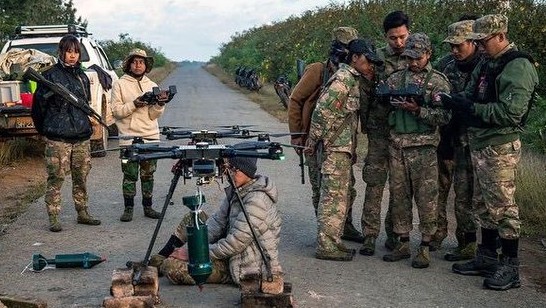
Matthew Van Dyke and six Ukrainians allegedly trained ethnic armed groups in drone assembly and signal jamming — using India as a transit route for European equipment bound for Myanmar
By TRH News Desk
New Delhi, March 19, 2026 — On the morning of March 13, India’s National Investigation Agency moved simultaneously at three airports — Delhi, Lucknow, and Kolkata. By the end of the day, seven foreign nationals had been detained: one American and six Ukrainians. All had entered India on tourist visas. None were tourists.
The operation would not have happened without Russia.
According to sources cited by Raksha Samachar, Russian intelligence agencies shared information about the group’s activities with their Indian counterparts — providing the directional input that turned three months of surveillance into a coordinated arrest. The full contents of that intelligence have not been disclosed. What is known is that it was enough.
The American has been identified as Matthew Aaron Van Dyke. He and the six Ukrainians had, according to the NIA, been under watch since 2024. Investigators allege the group made multiple trips to Myanmar, where they provided ethnic armed groups — forces actively fighting the country’s military junta — with training in drone warfare, drone assembly, and signal jamming. European-origin drones and equipment were allegedly moved through India into Myanmar, making Indian territory not a base of operations but a corridor through which the operation quietly ran.
The national security dimension is direct. The ethnic armed groups receiving the alleged training are believed by Indian agencies to maintain contact with insurgent organisations active in India’s northeast. Mizoram, Manipur, and Nagaland — all border states, all restricted-entry zones — were the focus of surveillance in the months leading up to the arrests. Van Dyke and his associates had entered some of these areas without the mandatory permits.
Why was Russia watching? The answer lies in Myanmar’s war. Moscow backs the junta. The ethnic armed groups fighting against it have increasingly drawn on expertise from Ukraine war veterans — a development Russia has been monitoring with evident attention. Van Dyke made that monitoring easier. His social media posts, which included the phrase “Russia, we are coming for you,” had placed him on Russian radar long before India became involved.
Raksha Samachar reported that “the NIA has told a special court that the group may be part of a broader network of up to fourteen individuals. The remaining members’ whereabouts — Myanmar, a third country, or elsewhere — are under active investigation.” Agencies are separately probing who within India facilitated access to the restricted border territories.
All seven accused have been remanded to eleven days of NIA custody. Their phones and laptops are with forensic teams.
Ukraine has filed a formal objection and demanded an impartial investigation. The United States has acknowledged awareness of the case and said nothing further. India has made no official statement. The investigation is ongoing.
What is already clear is the larger picture this case reveals: a proxy conflict in Myanmar, a Cold War-style intelligence exchange between Moscow and New Delhi, and a smuggling route for drone technology that ran — quietly, for months — straight through the Indian northeast.
NIA Nabs American and Six Ukrainians: Foreign Hands in Manipur?
Follow The Raisina Hills on WhatsApp, Instagram, YouTube, Facebook, and LinkedIn




