


By TRH Op-Ed Desk
RSS chief’s New York address puts Hindu inclusivity, social harmony and the organisation’s global outreach under the spotlight
New Delhi, August 31, 2026 — Rashtriya Swayamsevak Sangh (RSS) chief Mohan Bhagwat’s address in New York has triggered a wider debate over the organisation’s message on Hinduism, social harmony, Indian identity and its emerging engagement with global audiences.
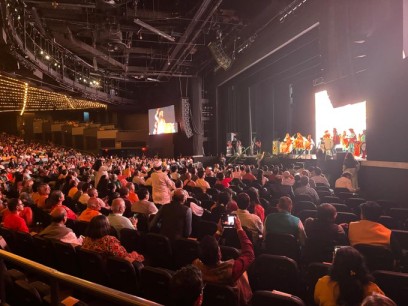
Speaking at an event in New York, Bhagwat said that if a Hindu believes Muslims cannot live in India, he is not a Hindu. The remark has drawn particular attention because it came at an event centred on themes of world unity and harmony.
Political analyst Manish Anand, in a monologue for The Raisina Hills, said Bhagwat’s statement needs to be viewed in the broader context of the RSS completing its centenary celebrations.
According to Anand, Bhagwat’s New York appearance is part of a wider international outreach following a year-long series of addresses across India. He is also scheduled to engage audiences in Canada and the United Kingdom.
“If a Hindu thinks that Muslims cannot live in India, then he is not a Hindu.”
Anand said the statement projects Hinduism as an inclusive and tolerant tradition and reflects Bhagwat’s emphasis on India’s “unity in diversity.”
He also linked the message to the RSS’s emphasis on social harmony. According to Anand, the organisation has increasingly highlighted social cohesion and dialogue as part of its broader ideological messaging.
RSS faces a credibility test
However, Anand noted that Bhagwat’s message has also triggered criticism over the perceived gap between the RSS chief’s statements and political developments associated with the BJP.
He said critics question whether Bhagwat’s emphasis on inclusivity and harmony is reflected consistently by political actors and sections of the wider Sangh ecosystem.
Anand pointed to controversies surrounding communal violence, mob attacks and debates over food, dress and identity as issues that could shape how Bhagwat’s New York message is received.
The larger question, he argued, is whether the RSS chief can persuade his followers and the wider political ecosystem to translate the message of social harmony into political and social practice.
Why is RSS taking its message abroad?
Anand believes the international outreach also has a significant Indian diaspora dimension.
He said Bhagwat’s message comes at a time when the Indian diaspora is an increasingly important constituency in the United States, the Gulf and Europe.
His New York speech also carried a message about diaspora identity, with Bhagwat stressing that Indians living abroad should remain loyal to their country of residence and contribute positively to their adopted societies.
Anand said this could also be read against the backdrop of the immigration debate in the United States and the policies of the Trump administration.
From Nagpur to New York
Anand also recalled the international attention generated by Bhagwat’s Vijayadashami address in Nagpur last year, when foreign journalists and opinion writers were invited to observe the RSS and its activities.
He argued that the subsequent international coverage helped bring the RSS more prominently into global political and ideological conversations.
Bhagwat’s New York appearance, therefore, is not simply another overseas speech, Anand said. It represents an effort to place the RSS and its worldview before a global audience—even if that exposure generates both favourable and critical reactions.
The immediate political question is whether Bhagwat’s emphasis on inclusivity, dialogue and social harmony will influence the political discourse associated with the BJP and the broader Sangh Parivar.
For the RSS, Anand suggested, the challenge now is not merely to articulate its message globally but to convince audiences that its words and actions are aligned.
Mohan Bhagwat in New York: ‘Obey Us and We’ll Protect You’—A Veiled US Policy Dig?
Follow The Raisina Hills on WhatsApp, Instagram, YouTube, Facebook, and LinkedIn




