


By TRH World Desk
Singapore’s Senior Minister highlights independent identity, praises China’s rapid AI adoption after five-day visit
New Delhi, May 25, 2026 — Lee Hsien Loong, Singapore’s former Prime Minister and current Senior Minister, has underlined Singapore’s independent national identity and sovereignty during his five-day visit to China. His remarks are in spotlight amid rising fear of China’s domination in the East Asian region. He underlined that Singapore cooperates with China due to “shared interests.”
He also pointed to Beijing’s rapid integration of artificial intelligence (AI) as an area from which Singapore could draw lessons.
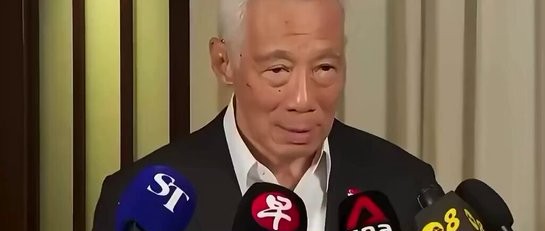
Lee completed his visit to China last week, holding meetings with officials in Guangxi and Shanghai before speaking to Singapore media on May 22 about the trip and the broader state of Singapore-China relations.
Addressing Singapore’s unique position as a Chinese-majority country with a multicultural identity, Lee stressed that ethnic links do not define the bilateral relationship between the two countries.
“We are a Chinese majority country but we are a multiracial society. We are a separate country with separate sovereignty from China,” Lee said.
He added that cooperation between Singapore and China is driven by mutual interests rather than ethnic affinity. “We cooperate as friends and in order to have mutual benefit, but it’s because we both share common interests and not because we are both of the same ethnic descent,” he said.
The remarks come at a time when Singapore continues to balance deep economic engagement with China while maintaining an independent foreign policy and close security ties with Western partners and regional states.
Singapore has often emphasised its sovereign identity despite its ethnic Chinese majority population, positioning itself as a multicultural nation-state built around multiracial governance.
Lee also spoke extensively about China’s growing use of artificial intelligence, noting the scale and speed at which AI capabilities are being embedded into daily applications and services.
“The Chinese are actually using AI in a very extensive way and many of the apps are integrated with AI capabilities,” Lee said.
He suggested that Singapore should study both the practical deployment of AI and its long-term societal implications. “That’s something I think we should learn from — both leaning forward on applying it as well as thinking ahead what the impact for us and how we can respond,” he added.
China has emerged as one of the world’s largest AI ecosystems, with technology firms increasingly integrating AI across consumer applications, manufacturing, governance and digital services.
Lee’s remarks indicate that while Singapore remains cautious about geopolitical alignments, it is closely watching technological developments in China, particularly in AI adoption and implementation.
Follow The Raisina Hills on WhatsApp, Instagram, YouTube, Facebook, and LinkedIn




