


By TRH World Desk
Keiko Fujimori Inaugurated: Cabinet, Promises & Reaction: She ends a 26-year exile for her party from power, while lists El Niño as her top priority.
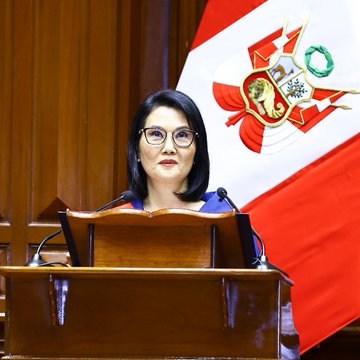
New Delhi, July 29, 2026 — Keiko Fujimori was sworn in as President of Peru on Tuesday, July 28, 2026, becoming the country’s first female head of state and bringing her Fuerza Popular party back to the presidency after four previous election attempts. The ceremony fell on Peru’s Independence Day, combining the traditional Fiestas Patrias holiday with the formal transfer of power.
Fujimori’s inauguration marks the return of Fujimorismo to the executive branch after 26 years, following her victory over former congressman Roberto Sánchez of Juntos por el Perú in the runoff. The National Elections Board (JNE) had formally proclaimed her the president-elect on July 3, along with Luis Fernando Galarreta as first vice president and Miguel Ángel Torres as second vice president.
In remarks ahead of the ceremony, Fujimori reaffirmed a firm commitment to respecting the independence of state powers and individual, expression, and press freedoms. She then walked from Congress to the Government Palace along Jirón Junín, where, according to Infobae Perú, supporters lining the route chanted “¡Sí se pudo!” as her delegation passed under heavy security.
Her First Message to the Nation
In a 45-minute address, Fujimori laid out seven policy priorities for her administration and said her government would concentrate first on two national emergencies: mitigating the effects of the El Niño weather phenomenon and improving citizen security.
On the economic front, she announced an increase to the minimum wage, from S/1,130 to S/1,300, and, separately, unveiled a doubling of the Pensión 65 elderly benefit, a new “Jóvenes con Futuro” program aimed at cutting youth unemployment in half, and a road and transit infrastructure plan that includes finishing Lima Metro Line 2 and building Lines 3 through. She also proposed a National Digital Authority to streamline government paperwork using artificial intelligence, and announced a one-time compensatory bonus for small and micro businesses.
On security and disaster response, Fujimori said her government would issue emergency decrees and request delegated powers from Congress to respond to El Niño, while coordinating with the judiciary and public prosecutor’s office on operational, procedural, and prison-system reforms to fight crime.
She closed her address on a conciliatory note, calling for national unity and urging lawmakers to build bridges of dialogue, thinking of the next generation rather than the next election. Peruvian fact-checkers were quick to weigh in: El Comercio’s data journalism unit verified the claims in her speech live against public data and expert analysis.
Not everything in the speech satisfied critics. La República noted that while Fujimori called for “national reconciliation,” she did not address human rights in her first message to the nation.
Follow The Raisina Hills on WhatsApp, Instagram, YouTube, Facebook, and LinkedIn




