


‘They Are Not Surrendering’: Al Jazeera’s Ali Hashem Warns of New War Phase as Iran Gets a Younger, Defiant Supreme Leader
By TRH World Desk
New Delhi, March 9, 2026 — As the United States continues to escalate its military campaign against Iran and the Trump administration works to build domestic support for the conflict, veteran Al Jazeera correspondent Ali Hashem has delivered a pointed on-air assessment: Iran is not bending, a new and younger Supreme Leader is now in place, and a more dangerous phase of the war is imminent.
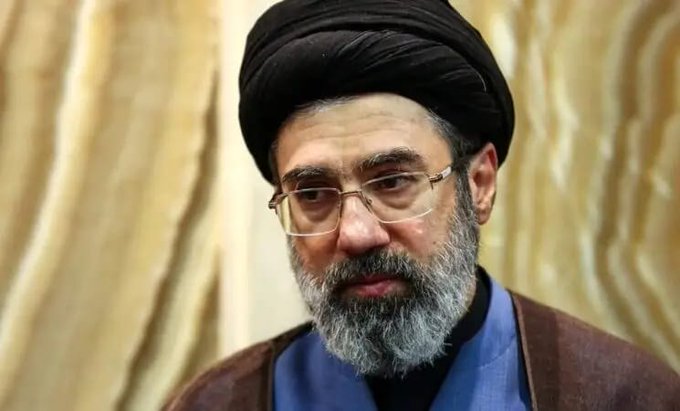
Iran on Monday announced Seyed Mojtaba Khamenei as the new Supreme Leader of the Islamic nation. The announcement came at a public square amid a strong and supporting crowd in Tehran.
Trump Wants Surrender — Iran Is Showing the Opposite
Speaking to Al Jazeera, Hashem pushed back against any narrative that frames this conflict as one-dimensional. “It’s not one-sided. It’s not just President Trump who runs the show,” Hashem told Al Jazeera.
He also stated that “there’s another side — and this is the other side, the Iranians. And they seem to be defiant and they seem to be insisting on not surrendering.”
The significance of that defiance, Hashem argued, is precisely its effect on Washington’s calculus. “This is what President Trump wants — he wants them to surrender. So the only thing they are showing is that they’re not surrendering. These are all issues that will really provoke President Trump to heighten his own pressure on the Iranian government,” added Hashem.
A New Phase of the War Is Coming
Hashem’s most consequential warning concerned the immediate trajectory of the conflict. “We are going to see a new phase in this war probably from tomorrow,” he said, adding: “We will see more attacks — and they will be looking for the new Khamenei to kill him.”
The context is critical. The original Supreme Leader Khamenei, who was 86 years old, has been killed in the conflict. A successor — approximately 30 years younger — has now assumed the position. Hashem’s warning is that the US-Israel coalition will treat the new Supreme Leader as a primary target, intensifying strikes aimed at decapitating Iran’s political and religious leadership structure.
The succession itself introduces a new and unpredictable variable. A younger Supreme Leader, shaped by the experience of surviving an existential military assault, may prove even more ideologically hardened than his predecessor.
Gulf States: De Facto War, Officially Unacknowledged
On the reaction of Iran’s Gulf neighbours to both the war and the new Supreme Leader, Hashem was unambiguous — and his framing of the regional situation was striking. “The Gulf neighbours already have concerns about what’s been happening now, regardless of them not announcing that they are in a situation of war with Iran,” he said.
He further stated that “but it’s a de facto war situation — whereas they are being hit by Iranian drones and missiles on a daily basis.” The distinction Hashem draws is important. Iran claims it is targeting American interests. But the drones and missiles are landing on the soil of Gulf states. “They’re already in a situation of hostility with Iran,” Hashem said — whether or not any Gulf government has formally acknowledged that reality.
On how the Gulf will receive the new Supreme Leader, Hashem offered a carefully calibrated assessment. “The way they are going to receive his election — or selection — I think it’s going to be with a lot of concern on one side. And at the same time they’ll be watching. Maybe he’ll come with something new, maybe he will surprise them with an opening towards the region,” Hashem told the broadcaster.
But Hashem was clear-eyed about the constraints. “It’s not the right time — because this is war. These are all things we will have to wait and see.”
The Optics Problem for Trump
The broader question put to Hashem — how the optics of a prolonged, escalating conflict play domestically for the Trump administration — drew a response that cut to the core of the strategic dilemma. Trump can intensify pressure. But Iran’s refusal to break provides no clean off-ramp. Every escalation that fails to produce Iranian capitulation becomes a political liability. Every drone that lands on a Gulf ally’s territory complicates the coalition. And a new, younger Supreme Leader with no incentive to negotiate from weakness means the war’s most dangerous chapter may not yet have begun.
“These are all issues,” Hashem said, “that will really provoke President Trump to heighten his own pressure.”
(Ali Hashem is a senior correspondent for Al Jazeera covering the Middle East and Iran.)
Iran-US-Israel War: After 4,500 Strikes, Who Is Actually Winning?
Follow The Raisina Hills on WhatsApp, Instagram, YouTube, Facebook, and LinkedIn




