


By TRH Foreign Affairs Desk
India’s Javelin agreement with the US comes despite trade tensions, raising questions over defence cooperation, China deterrence and the future of India-US military ties.
New Delhi, August 29, 2026 — The India-US relationship may be entering a new phase, with the Indian Army signing a Letter of Offer and Acceptance (LOA) with the United States for the procurement of Javelin anti-tank missile systems.
The US Embassy in New Delhi announced the development on August 28. The financial value and exact quantity of the Javelin systems were not disclosed. The agreement is significant not merely as another defence purchase, but because it comes at a time when India-US ties have faced tensions over trade and tariffs.
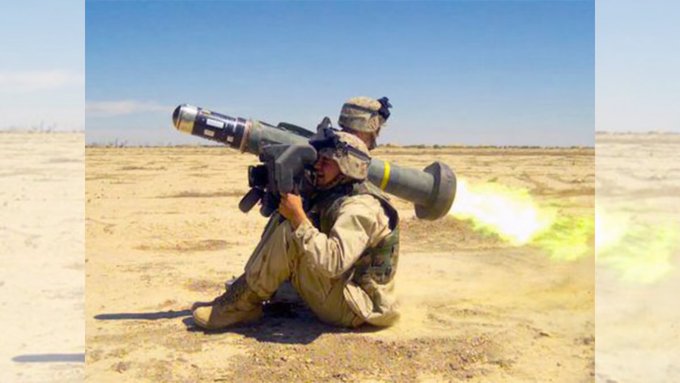
For India, the Javelin is a highly capable Western anti-armour system with a combat record that has given it global recognition. Its prominence during the Russia-Ukraine war has further strengthened its reputation.
But the bigger question is what the acquisition means for the wider India-US strategic relationship.
Javelin Is More Than Another Defence Purchase
The United States operates a government-controlled Foreign Military Sales system for major defence equipment. The Javelin agreement therefore represents a government-to-government defence commitment rather than an ordinary commercial transaction.
For New Delhi, the acquisition can be viewed through the requirements of India’s two-front security environment.
India has a western military challenge from Pakistan and a northern strategic challenge from China. Both possess substantial military capabilities and extensive inventories of missiles, drones, artillery and other weapons.
The Javelin gives Indian ground forces another advanced anti-armour capability, particularly relevant to a battlefield where mobility, precision and the ability to destroy armoured targets quickly can be decisive.
But its importance goes beyond the weapon itself.
From BrahMos to Javelin: The Co-Production Question
India’s experience with BrahMos provides an important benchmark.
BrahMos has emerged as one of the most visible examples of India’s ability to move from defence collaboration towards indigenous production and eventually exports. India has also been expanding its defence-export footprint.
The logical question, therefore, is whether the Javelin relationship can eventually move in a similar direction through greater manufacturing or industrial participation in India.
“If Javelin’s co-production can also take place in India, it could become another major example of India’s defence-manufacturing ambitions,” said geopolitics analyst Manish Anand.
Such a development would be strategically valuable because India is attempting to reduce its dependence on imported weapons while simultaneously integrating itself into global defence supply chains.
Is Javelin an Anti-China Signal?
The Javelin acquisition will inevitably attract attention in Beijing.
India and China continue to face an unresolved boundary dispute despite sustained diplomatic and military engagement. The two sides have held multiple rounds of talks on the boundary question, while military preparedness along the Line of Actual Control remains a central security concern.
Yet describing the Javelin purchase simply as an “anti-China” move would be too narrow.
“The Javelin should not be viewed simply as an anti-China development. The larger significance is that India’s defence partnership with the United States remains strong despite the tariff and trade tensions between the two countries,” Anand said.
That distinction is important.
India’s military modernisation is directed at building credible deterrence across its security environment, rather than preparing for a single adversary.
Intelligence Sharing Is the Bigger Strategic Story
The evolution of India-US defence cooperation also extends beyond hardware.
Intelligence sharing, military exercises, logistics cooperation and access to advanced surveillance capabilities have increasingly become important components of the relationship.
The 2020 Galwan crisis demonstrated the importance of intelligence and situational awareness along the India-China border. Since then, India and the United States have continued expanding military cooperation and exercises.
The combination of Western-origin platforms, intelligence cooperation and increasingly interoperable military forces could strengthen India’s ability to monitor and respond to developments along its borders.
The Javelin should therefore be viewed as one component of a much larger strategic architecture.
Pakistan Adds Another Dimension
Pakistan is another factor behind India’s military modernisation.
Islamabad has historically depended heavily on Chinese military equipment, but its defence relationships have also expanded with countries including Türkiye.
For India, the emergence of multiple defence-technology channels for Pakistan makes continued modernisation important.
“Pakistan’s potential defence modernisation is an important factor. In such a situation, the Javelin purchase and the possibility of greater India-US defence-industrial cooperation become significant,” Anand said.
However, the objective should be deterrence rather than an arms race.
India’s strategic challenge is to ensure that its military capabilities are sufficiently credible to discourage adventurism on either front.
Trump-Modi Ties: Defence Cooperation Survives Trade Friction
Perhaps the most politically significant aspect of the Javelin agreement is its timing.
India and the United States have experienced considerable friction over tariffs and trade. Yet defence cooperation has continued to move forward.
That suggests that the strategic foundation of the relationship may be more resilient than the turbulence in the economic relationship sometimes indicates.
The United States had already approved a $93 million Foreign Military Sale to India in November 2025 involving Javelin systems and Excalibur projectiles, including India’s request for up to 100 Javelin systems.
The latest LOA represents a further step in that trajectory.
A New Chapter in India-US Defence Relations?
India is simultaneously pursuing strategic autonomy and deeper partnerships with major defence powers.
That may appear contradictory, but it is increasingly becoming the central feature of India’s defence policy.
New Delhi wants access to the world’s most advanced military technologies while building domestic manufacturing capacity. It wants stronger partnerships with the United States, France, Israel and other powers without becoming strategically dependent on any one country.
The Javelin agreement fits into that broader strategy.
“The Javelin deal could mark a new turn in India-US relations. Despite the Trump administration’s trade and tariff pressures, defence cooperation between the two countries remains strong, and that is a welcome development,” Anand said.
The real test, however, will be what comes next.
If the relationship moves from buying American weapons to producing more advanced systems in India, integrating Indian defence companies into global supply chains and expanding technology cooperation, the Javelin agreement could eventually be remembered as more than a missile purchase.
It could become another marker of the transformation of the India-US defence relationship—from buyer-seller ties towards a deeper strategic and industrial partnership.
Modi-Trump Talk ‘Deployments of US & Indian militaries in Indo-Pacific’
Follow The Raisina Hills on WhatsApp, Instagram, YouTube, Facebook, and LinkedIn




