


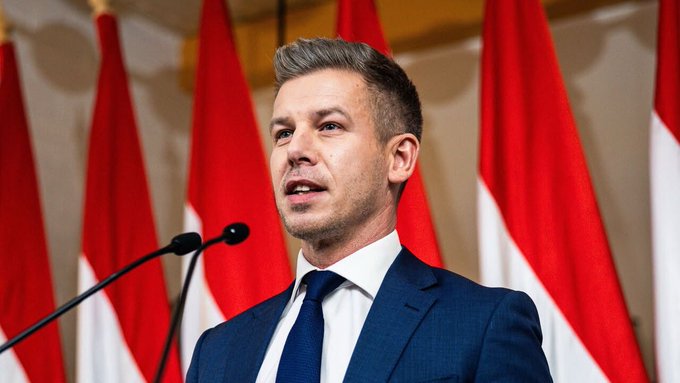
Tisza party wins parliamentary supermajority as the Trump and Putin ally concedes “painful” defeat — Brussels exhales, Kyiv watches closely
By TRH World Desk
New Delhi, April 13, 2026 — In one of the most consequential elections in recent European history, Hungarian voters on Sunday ousted long-serving Prime Minister Viktor Orbán after 16 years in power, rejecting the authoritarian politics he embodied in favour of a pro-European challenger in a result with global repercussions.
With 97.35 per cent of precincts counted, Magyar’s centre-right Tisza party secured 138 seats in the 199-seat Hungarian parliament on 53.6 per cent of the vote, while Orbán’s Fidesz took just 55 seats with 37.8 per cent. The margin was not merely a defeat — it was a demolition.
Orbán conceded, saying: “The election result is painful for us, but clear. The responsibility and possibility of governing was not given to us.” He then called Magyar personally to offer his congratulations — ending a 16-year grip on power that had made Hungary a watchword for democratic backsliding inside the European Union.
“Tonight, Truth Prevailed Over Lies”
In a victory speech to tens of thousands of supporters gathered along the Danube River in Budapest, Magyar said: “Tonight, truth prevailed over lies. Today, we won because Hungarians didn’t ask what their homeland could do for them; they asked what they could do for their homeland.”
Magyar, a 45-year-old former ruling party insider who campaigned against corruption and on everyday issues like healthcare and public transport, pledged to rebuild Hungary’s relationships with the European Union and NATO — ties that had badly frayed under Orbán. In his first post-victory remarks, he called on Hungary’s president, top justices and chief prosecutor to resign, signalling an immediate intent to dismantle what critics called Orbán’s authoritarian architecture.
What Changes — and What Doesn’t — for Europe
The reaction from Brussels was swift and unambiguous. European Commission President Ursula von der Leyen said: “Hungary has chosen Europe. A country reclaims its European path. The Union grows stronger.”
Orbán’s exit would deprive Russian President Vladimir Putin of his main ally inside the EU and send shockwaves through Western right-wing circles, including US President Donald Trump’s MAGA movement. US Vice President JD Vance had visited Hungary earlier in the week to rally alongside Orbán, attacking what he called Brussels “bureaucrats,” while Trump had promised to bring American “economic might” to Hungary if Fidesz won. Neither intervention proved sufficient.
A Tisza victory could open the way for the release of EU funds that Brussels had suspended over what it described as Orbán’s erosion of democratic standards.
Analysts caution against assuming an overnight transformation. One observer noted that while Hungary is unlikely to shift dramatically immediately, the overall direction points toward closer alignment with mainstream EU policy — and that Budapest had been one of the main obstacles to consensus on Ukraine sanctions and Gaza resolutions. Whether another EU member state steps up to fill Orbán’s role as Europe’s internal disruptor remains an open question.
The election saw a turnout of nearly 80 per cent — a number that speaks for itself. When a people are truly motivated, the ballot box remains the most powerful instrument in democracy’s arsenal.
The chair, as Magyar’s supporters chanted through the streets of Budapest on Sunday night, is temporary. The people remain.
FAQ
Q: Who won the 2026 Hungarian election?
A: Peter Magyar and his centre-right Tisza party won a landslide parliamentary majority, with 53.6% of the vote and 138 of 199 seats, ending Viktor Orbán’s 16-year rule.
Q: Why did Viktor Orbán lose the Hungary election?
A: Magyar campaigned on anti-corruption, healthcare and public transport — domestic issues — while Orbán’s pro-Russia stance, democratic backsliding and 16 years in power alienated a growing majority of Hungarian voters.
Q: What does Peter Magyar’s win mean for the EU?
A: Hungary is expected to shift toward mainstream EU policy, unblocking EU funds suspended under Orbán and removing one of the main obstacles to consensus on Ukraine sanctions and other key decisions.
Q: Was Viktor Orbán allied with Donald Trump?
A: Yes. Orbán was one of Trump’s closest European allies. JD Vance visited Hungary days before the election to rally in his support, but the intervention did not prevent Orbán’s defeat.
Q: What did Peter Magyar say in his victory speech?
A: Magyar told tens of thousands of supporters in Budapest: “Tonight, truth prevailed over lies,” pledging to rebuild Hungary’s ties with the EU and NATO and calling for top officials — including the president and chief prosecutor — to resign.
Europe’s Dirty Secret: €213 Bn Flow to Russia Despite Sanctions
Follow The Raisina Hills on WhatsApp, Instagram, YouTube, Facebook, and LinkedIn




