


A curated reading list for the curious — from India’s lost civilisation to the rivers of the northeast
By NIRENDRA DEV
New Delhi, April 13, 2026 — Reading, as the author rightly notes, is a vanishing art. But for those who still practise it, here are four books that reward the effort with scholarship, honesty and the kind of surprise that no algorithm can recommend.
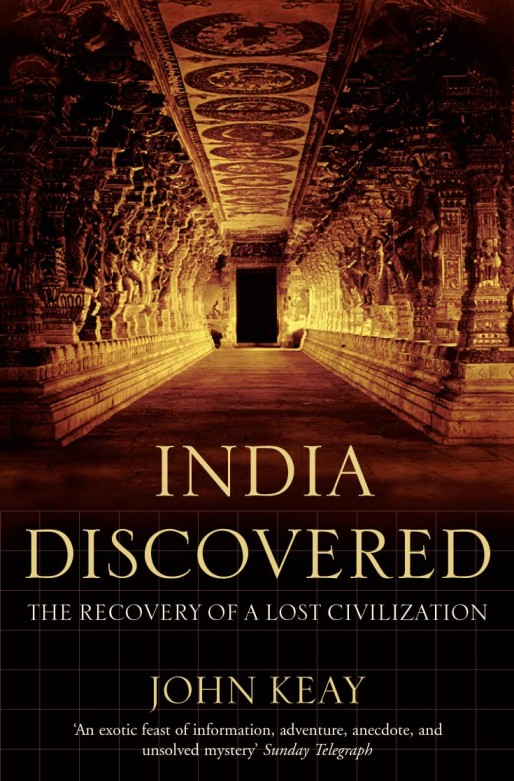
India Discovered: The Recovery of a Lost Civilization — John Keay
“Two hundred years ago, India was seen as a place with little history.” That is the provocative opening premise of John Keay’s remarkable account of how a lost civilisation was recovered — not by academics, but by amateurs in uniform.
“The men who discovered India came as amateurs,” Keay writes. “By profession they were soldiers and administrators. But they returned home as giants of scholarship.” The nineteenth century, he argues, was the age of enquiry — and India found its Darwin, its Livingstone, its Schliemann in the most unlikely of places: the cantonment and the collector’s office.
The book is, as Keay himself acknowledges, still incomplete — because Indian history itself remains incomplete. “It is devoid of almost everything that traditionally makes history palatable for the general reader.” And yet it is an absolute joy to read. A caveat for the nationalist reader: Keay paints a rather rosy picture of the British Empire. Those expecting an account of India’s plunder by colonial or medieval rulers will find themselves disappointed. The book is not that story. But it is its own kind of essential — a reminder that the recovery of civilisational memory is itself a kind of scholarship, and that scholarship has no fixed nationality.
New Book Tracks China’s ‘Total War’ amid Fentanyl, COVID Deaths
The Sewing Circles of Herat: A Personal Voyage Through Afghanistan — Christina Lamb
Christina Lamb is one of the finest war correspondents of her generation, and this book is among her most unsettling. It takes the reader deep into the world of the Taliban — not through ideology, but through texture, anecdote and quiet devastation.
Consider this: “Oh my God, he is a Talib… and that meant he is sissy or he is available.” And then this — on the social consequences of gender apartheid in Pashtun society: “The inevitable result is sodomy. It’s the done thing in Pashtun society because of women being shut away in houses. A good looking boy would have dozens of attempts made on him.”
Lamb does not sensationalise. She documents. And in one of the book’s most elegiac passages, she captures Afghanistan’s tragedy through its exiled king: “King Zahir Shah gazed into the distance with the terrible sadness of a man who clearly bears the weight of his conscience — of one million of his countrymen dead, another one and a half million disabled.”
Lamb also authored Farewell Kabul: From Afghanistan to a More Dangerous World and House of Stone, about a family divided in war-torn Zimbabwe — a book that captures not just the source of conflict but the conviction that hope survives even in Africa’s most wounded countries.
The Death of Britain? — John Redwood
Published in 1999 — long before Brexit made these questions fashionable — John Redwood’s book asked what few dared to: Can the United Kingdom survive devolution, European integration, reform of the Lords, the slimming of the monarchy and proportional representation? Could Scotland shatter the Union by demanding full independence?
Redwood was Chief Policy Advisor to Margaret Thatcher in the 1980s and one of privatisation’s earliest global advocates. His book is conservative in temperament but sharp in diagnosis. “There is nothing wrong with reversing the past,” he writes. “It may be politically correct to bemoan those who do as fuddy-duddy or old-fashioned, yet that sense of continuity in British life is our greatest strength.” He also observes, with characteristic English understatement: “The British people are slow to awaken to provocation” — and — “The British people are not very keen on revolutions.” Brexit, one might argue, proved him both right and wrong at once.
River Dog: A Journey Down the Brahmaputra — Mark Shand
Every reading occasion has a setting, and this book demands one near water. Mark Shand — celebrated British travel writer — journeys down the Brahmaputra, one of the world’s great rivers, beginning as a glacial stream in Western Tibet and broadening through Assam and Bangladesh before joining the Bay of Bengal.
What makes River Dog singular is its companion: a dog who accompanies Shand through northeast India, adding what the author beautifully describes as a new “dimension to your travels — they take you away from yourself.” For lovers of the northeast, the book is a gift — Shand traces the history of the Ahoms, their capital at Sibsagar and the etymology of Assam itself: “The Ahoms named the region Assam, which means undulating land” — lahardar, as Hindi speakers might recognise.
The Brahmaputra flows with mystery and legend. So does this book.
Reading may be a vanishing art. But vanishing arts are worth preserving — one page at a time.
Books That Explain Iran: Essential Reading on the US-Iran Conflict
FAQ
Q: What is India Discovered by John Keay about?
A: It traces the recovery of India’s lost civilisation by soldiers and administrators who became scholars — arguing that two centuries ago, India was seen as a place with little history, and showing how that changed.
Q: What does The Sewing Circles of Herat reveal about Taliban society?
A: Christina Lamb’s book explores the cultural and social realities of Taliban-controlled Afghanistan through personal testimony, including the consequences of gender apartheid in Pashtun communities.
Q: Was John Redwood’s The Death of Britain prophetic about Brexit?
A: Published in 1999, the book raised questions about devolution, European integration and Scottish independence long before Brexit — making it remarkably prescient about the pressures that would eventually fracture British political consensus.
Q: What is the Brahmaputra river’s origin?
A: According to Mark Shand’s River Dog, the Brahmaputra begins as a glacial stream in Western Tibet, flows through India and Bangladesh, and empties into the Bay of Bengal. The name Assam itself, the Ahoms noted, means “undulating land.”
Q: Why is reading described as a “vanishing art” in this piece?
A: The phrase reflects a broader cultural observation that sustained, deep reading of books — particularly of history, travel and politics — is in decline in the age of short-form digital content.
Follow The Raisina Hills on WhatsApp, Instagram, YouTube, Facebook, and LinkedIn




