


From Amit Shah being heckled at his own rally to Supreme Court staying the UGC regulation, India’s so-called loyal general category voters are sending BJP a warning it cannot afford to ignore before 2026–27 elections.
By TRH Political Desk
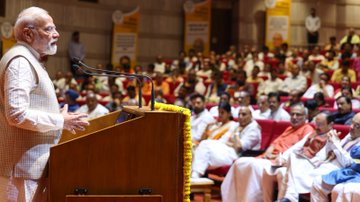
New Delhi, March 16, 2026 — The moment was difficult to miss. At a recent rally in Uttarakhand, Union Home Minister Amit Shah asked the crowd to raise the “Bharat Mata Ki Jai” slogan. What came back from sections of the audience was “UGC Murdabad.”
The expression on Shah’s face, according to Manish Anand, a political analyst speaking on The Raisina Hills, said everything. “There was not just discomfort on Amit Shah’s face — there was anger. And somewhere, BJP’s leadership is now sensing this is slipping out of their hands,” Anand said.
At the centre of this political storm is the UGC regulation introduced in July — one that the Supreme Court stayed within a month, ruling it favoured one particular social group at the expense of another. But the stay has not calmed the anger. If anything, Anand argues, it has deepened it.
“The UGC regulation has become a bone stuck in BJP’s throat,” he said. “They can neither swallow it nor spit it out,” he added.
The myth of the ‘captive’ vote
For years, Anand said BJP’s political calculus has rested on a confident assumption: that Indi’s general category — upper castes, the self-described middle class — is a locked vote bank. Grievances or not, this bloc would always return to the party because it had nowhere else to go.
Anand calls this assumption a dangerous myth. “Look at Uttar Pradesh in 2012. Pawan Pandey won from Ayodhya on a Samajwadi Party ticket. He was a Brahmin. Brahmins in UP voted heavily for Akhilesh Yadav that year — not BJP. And in 2007, the same community voted for Mayawati and BSP in large numbers,” he noted.
“In Himachal Pradesh — just four years ago — it was this very ‘general category’ bloc that brought Congress to power. This is not ancient history,” added Anand.
What is at stake in 2026 and 2027
The electoral calendar makes the stakes particularly high. Assembly elections are due in West Bengal, Assam and Tamil Nadu this year. Uttar Pradesh — where UGC-related anger is said to be most intense — votes next year, alongside Uttarakhand, Himachal Pradesh, Goa and Punjab.
“This group doesn’t just vote — it shapes opinion,” Anand warned, adding: “They are strategic voters and opinion-makers. If they begin looking for alternatives, BJP faces serious trouble in UP, Uttarakhand, and possibly even Gujarat in 2027.”
The deeper systemic failure
Anand situates the UGC controversy within a broader critique of special laws in India, arguing they exist not to deliver justice but to mask the state’s inability to do so through ordinary institutions.
“If our police, administration and judiciary were truly efficient, you would not need special laws for any group. Every citizen would get equal justice under the same law,” he said. “Special laws are invented to justify systemic failure — nothing more.”
He draws a parallel with Section 498A of the IPC — the anti-dowry provision — which multiple Supreme Court and High Court judgments have noted was routinely misused. The UGC regulation, he argues, carried a similar presumption of guilt against the accused, resembling the burden-of-proof reversal seen in anti-terrorism statutes.
“Natural law says the state must prove the charge. When a mere accusation is enough to destroy someone — that is not rule of law. That is a system covering its own failures with legislation,” added Anand.
With the Supreme Court’s final judgment still pending and social media keeping the controversy alive despite limited mainstream coverage, Anand’s conclusion is pointed: “If BJP continues treating this constituency as a guaranteed bank rather than voters who need to be respected, the shock it faces in the coming assembly elections could be historic.”
Follow The Raisina Hills on WhatsApp, Instagram, YouTube, Facebook, and LinkedIn




